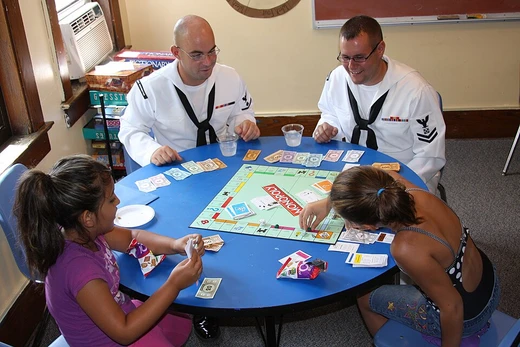
Scrabble
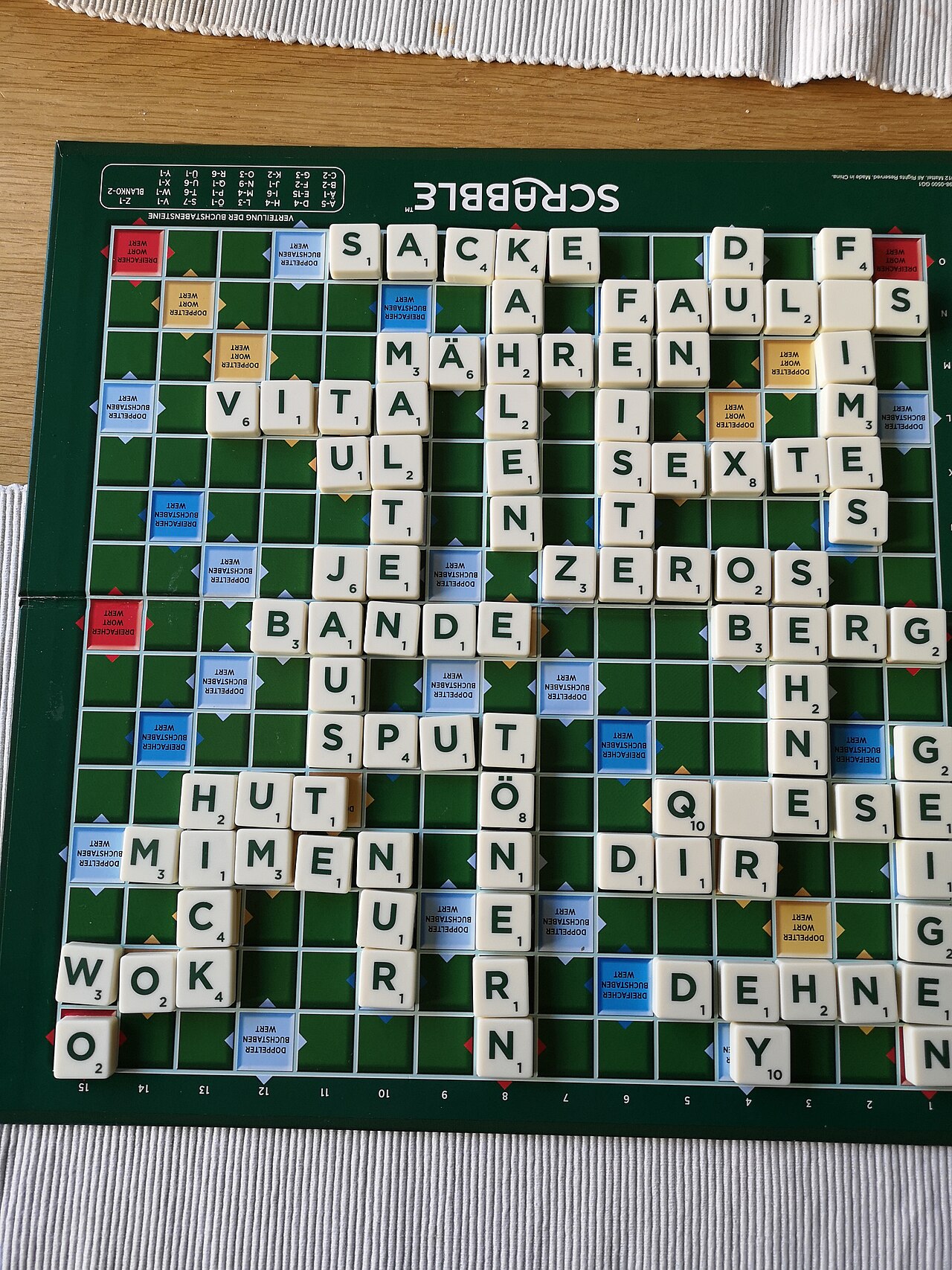
A crossword-style word game played on a 15×15 board.

Zintosch7 · CC BY-SA 4.0
Scrabble is a word game in which two to four players score points by placing letter tiles onto a 15×15 grid to form words.
Lore & Background
He determined letter distributions and point values by frequency analysis of sources including The New York Times. The game, originally called Criss-Crosswords, added the 15×15 board and crossword-style play. Butts manufactured a few sets but failed to sell the game to major manufacturers. In 1948, James Brunot of Newtown, Connecticut, bought the rights, standardized the board layout and rules (including the introduction of premium squares, which were not part of Butts' original design), and renamed the game Scrabble. Brunot and his family made 2,400 sets in 1949 in a converted schoolhouse in Dodgingtown, Connecticut, but lost money. In 1952, unable to meet demand, Brunot licensed manufacturing to Selchow and Righter, which had previously rejected the game. By 1954, cumulative sales had reached nearly four million sets. Hasbro later acquired the rights for the U.S. and Canada, while Mattel holds rights elsewhere.
Reader's Guide
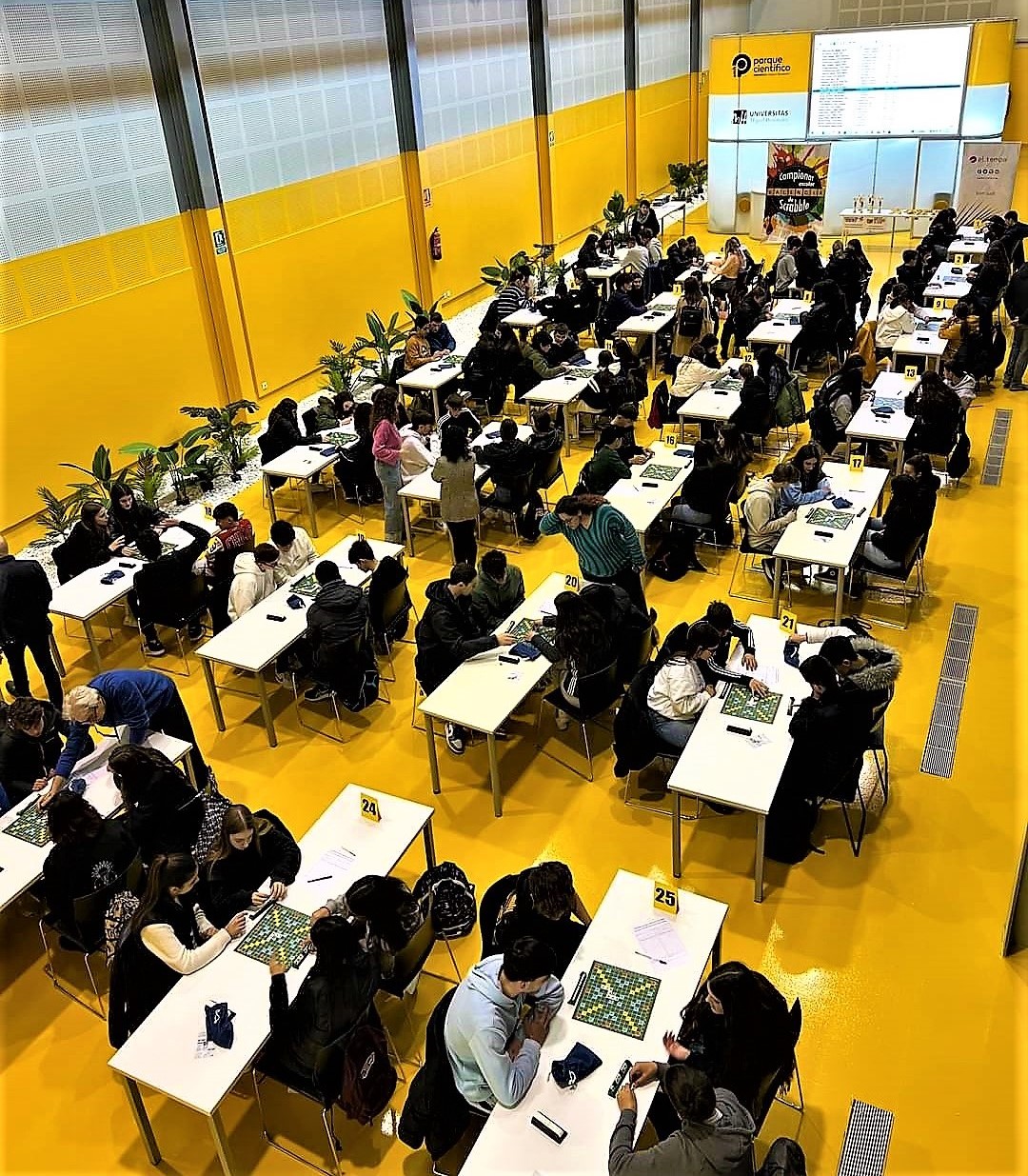
Scrabble's significance lies in its enduring popularity as a word game that combines vocabulary, strategy, and probability. There are approximately 4,000 Scrabble clubs worldwide. Scrabble was inducted into the National Toy Hall of Fame in 2004. The game's standardized tournament boards and word lists, such as the NASPA Word List, have fostered competitive play. The distribution of letter tiles, based on English letter frequency, and the strategic use of premium squares make Scrabble a lasting fixture in both casual and competitive gaming.
Did You Know?
- Scrabble was originally called Criss-Crosswords before James Brunot renamed it in 1948.
- The game's letter tile distributions were based on a frequency analysis of sources including The New York Times.
- By 1954, nearly four million Scrabble sets had been sold cumulatively after Selchow and Righter took over manufacturing.
- Scrabble was inducted into the National Toy Hall of Fame in 2004.
Origins & Invention
Alfred Mosher Butts, an American architect working in Poughkeepsie, New York, conceived the game in 1931 as a refinement of an earlier word game he had invented called Lexiko. Both titles shared the same set of letter tiles, whose distributions and point values Butts carefully worked out by performing a frequency analysis of letters drawn from various published sources, including The New York Times. The new version, which he christened Criss-Crosswords, added the 15×15 gameboard and the crossword-style gameplay that would become the game's defining feature. Butts manufactured a small number of sets by hand but was unable to interest any of the major game manufacturers of the day in producing it commercially. The game languished in obscurity for nearly two decades before a Connecticut resident would eventually transform it into the household name it is today.
The Road to Commercial Success
In 1948, James Brunot of Newtown, Connecticut—one of the very few people who owned a copy of the original Criss-Crosswords—purchased the manufacturing rights from Butts in exchange for a royalty on every unit sold. Brunot kept the letter distribution essentially intact but made minor adjustments to the premium squares, simplified the rules, and gave the game a new name: Scrabble, a real English word meaning "scratch frantically." In 1949, Brunot and his family produced 2,400 sets in a converted former schoolhouse in Dodgingtown, a section of Newtown, though the venture lost money. Unable to keep up with growing demand, Brunot licensed manufacturing to Long Island-based Selchow and Righter in 1952. The company's president, Harriet T. Righter, initially noted it was "a nice little game" that would sell well in bookstores. By 1954, nearly four million sets had been sold, and Selchow and Righter purchased the trademark outright in 1972.
Equipment & Game Mechanics
The standard English-language Scrabble set contains 100 tiles: 98 bearing a single letter and a point value ranging from 1 to 10, plus two blank tiles that carry no value. Point assignments reflect letter frequency in English—vowels and common consonants like L, N, R, S, and T are worth a single point, while rare letters such as Q and Z carry the maximum ten. Tiles are typically made of wood or plastic, measuring 19 by 19 millimetres and 4 mm thick, slightly smaller than the board squares they occupy. The 15×15 board holds 225 squares, of which 61 are premium: eight triple word score, 17 double word score (including the center square H8), 12 triple letter score, and 24 double letter score. In 2008, Hasbro shifted the premium-square colors to orange, red, green, and blue, though tournament boards still favor the original color scheme and feature a raised, rotatable grid. Each player uses a rack to conceal their tiles from opponents.
Global Reach & Legacy
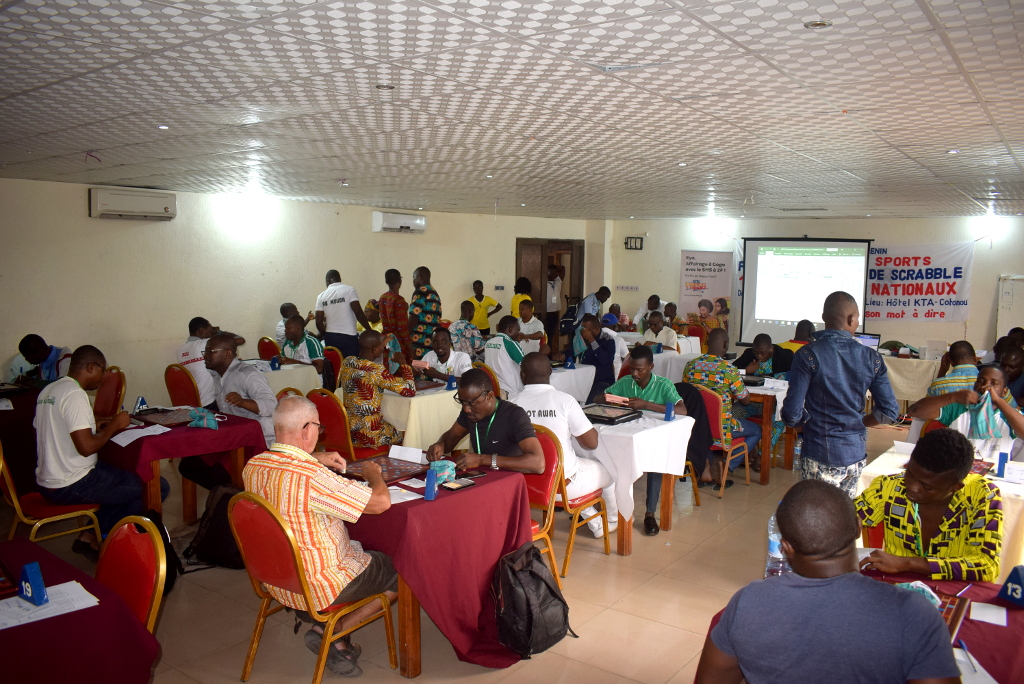
As of 2008, Scrabble was sold in 121 countries and available in more than 30 languages, with approximately 150 million sets sold worldwide. Roughly one-third of American homes and half of British homes own a set, and around 4,000 Scrabble clubs operate globally. Manufacturing rights are split: Hasbro produces the game in the United States and Canada under its Milton Bradley and Parker Brothers brands, while Mattel holds the rights for all other markets. The game's television presence includes an NBC daytime show hosted by Chuck Woolery that ran from 1984 to 1990 (with a brief 1993 revival) and a 2011 cable adaptation called Scrabble Showdown on The Hub. Scrabble was inducted into the National Toy Hall of Fame in 2004, cementing its status as one of the most enduring word games ever created.
Common Misconceptions (Editorial)
- Some people believe the game was always called Scrabble, but it was originally named Criss-Crosswords before James Brunot renamed it in 1948. - It is commonly assumed that the 15×15 board and premium squares were part of the original design, but premium squares were introduced by Brunot, not by creator Alfred Butts. - Another misconception is that Scrabble was an immediate success; in fact, Brunot and his family lost money on the first 2,400 sets made in 1949, and it was only after Selchow and Righter took over manufacturing in 1952 that sales surged to nearly four million by 1954.
Why It Matters (Editorial)
Scrabble endures because it combines the universal appeal of language with the thrill of strategic competition, rewarding both vocabulary and tactical board play. Its ability to bring together players of different ages and backgrounds around a shared challenge has made it a staple of family game nights and a lasting cultural icon for more than seventy years.
Gallery
Frequently Asked Questions
How do you play Scrabble?
Two to four players take turns placing lettered tiles onto a 15×15 grid, forming valid words to earn points. Bonus squares on the board multiply the value of certain placements.
What is the playing surface like?
Scrabble uses a square 15×15 grid with special premium squares that award double or triple letter and word scores.
More in Board Games 1-22
Spotted an error? Know more?
This is a living reference — every entry is fact-audited, and reader corrections feed straight into our audit queue. Suggest an edit · See this site's audit record