Go
Ancient abstract strategy game of territory capture.

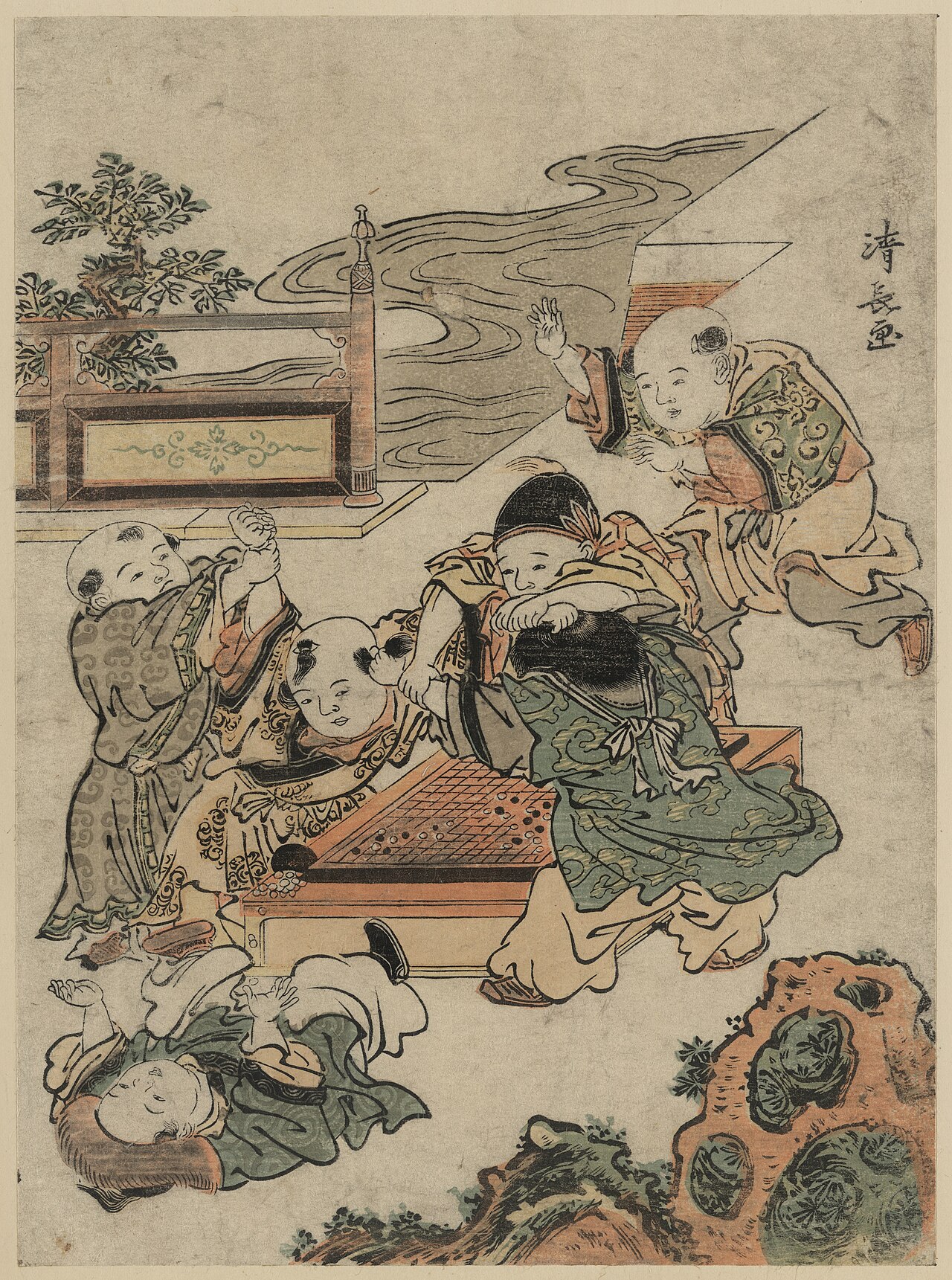
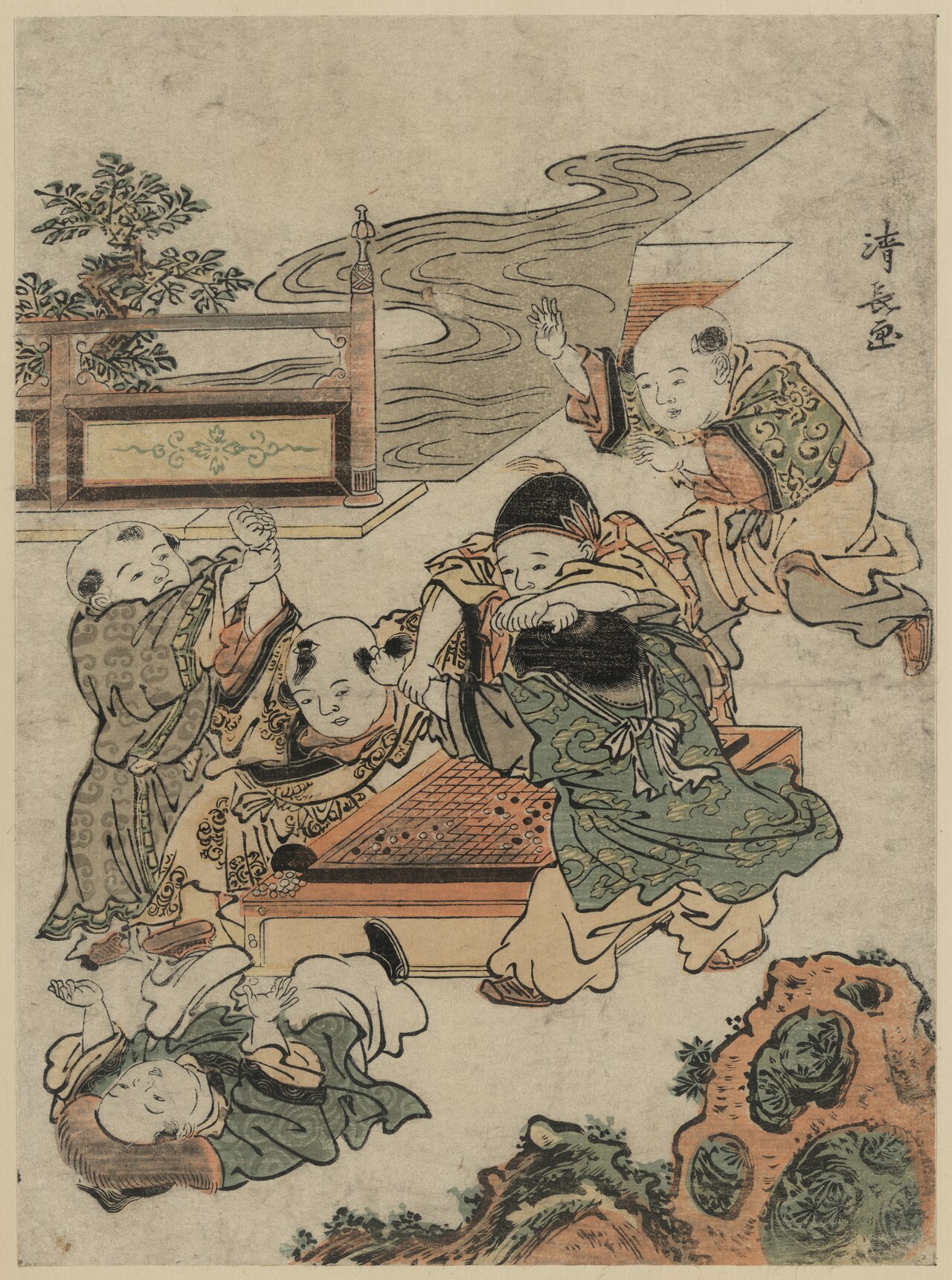
Torii, Kiyonaga, 1752-1815, artist · Public domain
Go is an abstract strategy board game for two players, invented in China more than 2,500 years ago. It is believed to be the oldest board game continuously played to the present day, with over 46 million people worldwide who know how to play, and over 20 million current players, the majority of whom live in East Asia.
- invented
- China, more than 2,500 years ago
- earliest_written_reference
- Zuo Zhuan (c. 4th century BCE)
- current_players
- over 20 million
- known_for
- being the oldest continuously played board game; one of the four essential arts of cultured aristocratic Chinese scholars in antiquity
Lore & Background
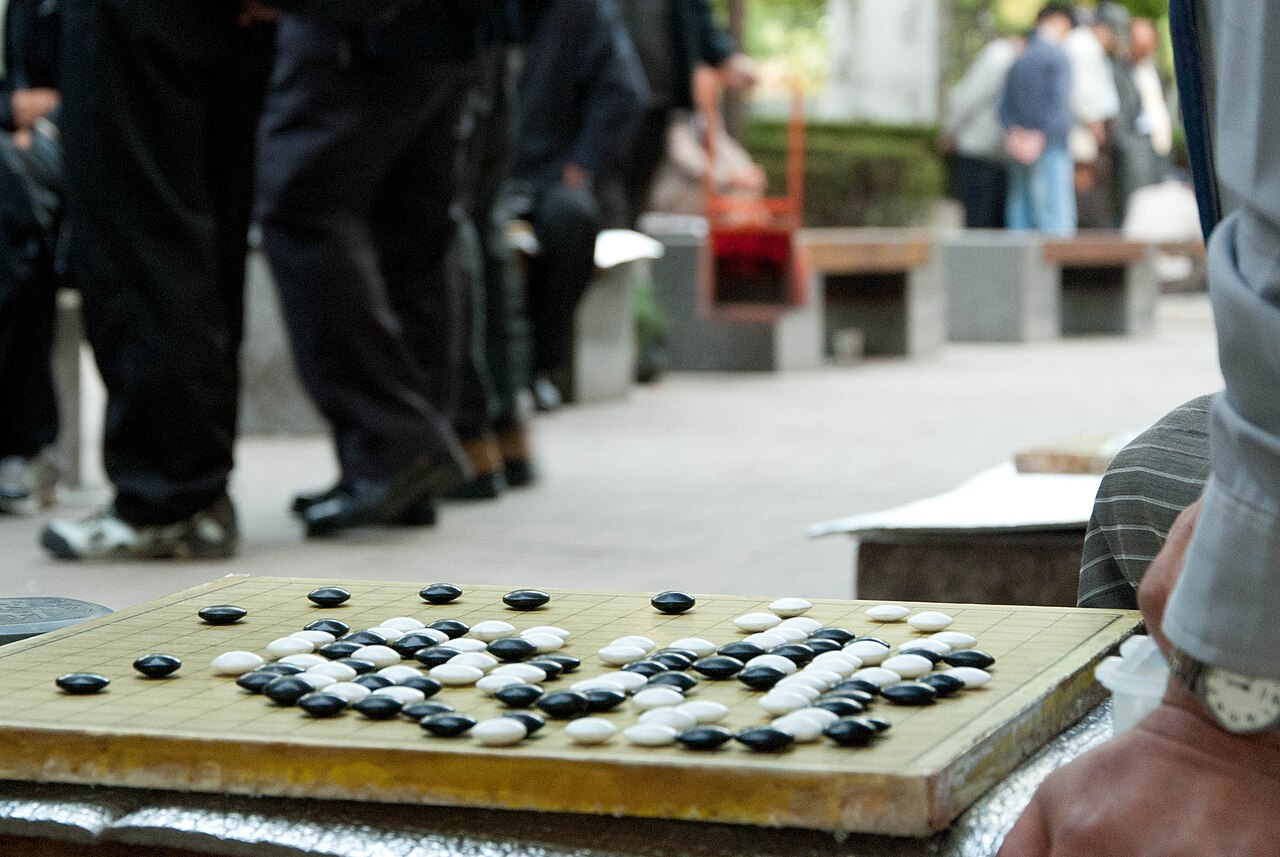
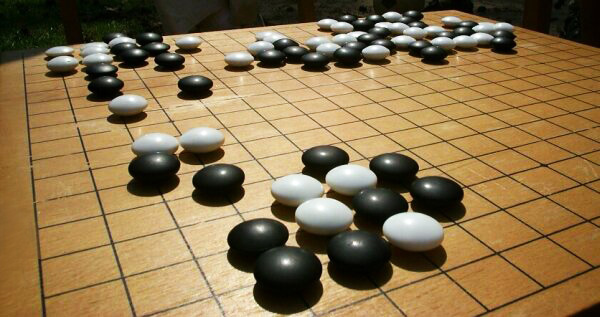
The game was invented in China more than 2,500 years ago. The earliest written reference to the game is generally recognized as the historical annal Zuo Zhuan (c. 4th century BCE). Go was considered one of the four essential arts of the cultured aristocratic Chinese scholars in antiquity. The 19×19 board had become standard by the time the game reached Korea in the 5th century CE and Japan in the 7th century CE. Archaeological evidence shows that the game was played in earlier centuries on a board with a 17×17 grid. The playing pieces are called stones. One player uses white stones and the other black stones. Players take turns placing their stones on vacant intersections on the board. Once placed, stones may not be moved, but captured stones are immediately removed. A single stone or connected group is captured when surrounded by the opponent's stones on all orthogonally adjacent points. The game proceeds until neither player wishes to make another move. The winner is determined by counting each player's surrounded territory along with captured stones and komi (points added to the score of the player with the white stones as compensation for playing second). Games may also end by resignation.
Reader's Guide
Go is an adversarial game between two players with the objective of capturing territory by occupying and surrounding a larger total empty area of the board with one's stones than the opponent. Despite its relatively simple rules, Go is extremely complex. Compared to chess, Go has a larger board with more scope for play, longer games, and many more alternatives to consider per move. Essential aspects include control of sente (controlling the offense), and the concept that any formation of stones needs at least two eyes to be unconditionally alive. The general strategy is to place stones to fence off territory, attack the opponent's weak groups, and stay mindful of the life status of one's own groups. Situations where mutually opposing groups must capture each other are called capturing races, or semeai. The game ends when both players pass or when one player resigns. Players' strength is indicated by rank (from 30 kyu to 1 kyu, then 1 dan to 7 dan, then 1 dan pro to 9 dan pro). A difference in rank may be compensated by a handicap. There are different rulesets (Korean, Japanese, Chinese, AGA, etc.), which are almost entirely equivalent except for certain special-case positions and the method of scoring at the end.
Did You Know?
- The name Go is a short form of the Japanese word igo, which derives from Middle Chinese ɦʉi gi (圍棋, Mandarin: wéiqí, meaning 'encirclement board game').
- The Korean name baduk is a native derived term, most likely originally consisting of words meaning 'cultivated field' and 'stone'.
- Beginners often play on smaller 9×9 or 13×13 boards, while the standard board is 19×19.
- Ko is a potentially indefinitely repeated stone-capture position; the rules do not allow a board position to be repeated.
Ancient Origins and Cross-Cultural Journey
Go traces its roots to China, where it was invented more than 2,500 years ago, making it the oldest board game still continuously played today. The earliest written mention scholars generally accept appears in the Zuo Zhuan, a historical annal dating to roughly the 4th century BCE. In antiquity, the game held a place of honor among the four essential arts expected of cultured Chinese aristocratic scholars. Archaeological evidence indicates that earlier versions of the game were played on a 17×17 grid before the now-familiar 19×19 layout became the norm. That standard board size had taken hold by the time the game crossed into Korea in the 5th century CE and reached Japan by the 7th century CE. Each culture gave the game its own name—Weiqi in Chinese, Baduk in Korean, and Go in Japanese—yet the fundamental objective of fencing off more territory than the opponent remained unchanged across every tradition.
The Mechanics of Life, Death, and Territory
At its core, Go is a contest of enclosure. Two players alternate placing black or white stones on the vacant intersections of the grid; once a stone is set, it never moves. A stone or connected group is captured the moment the opponent seals it on every orthogonally adjacent point, and those captured stones are removed immediately. The concept of eyes is central to survival: a formation must possess, or be able to create, at least two enclosed open points to be considered unconditionally alive. Filling one eye of a two-eyed group does not capture it—it merely sacrifices the filling stone—making complete surrounding impossible. Groups that cannot secure two eyes are dead and vulnerable to capture. Players also battle over sente, the initiative that forces an opponent into defensive responses, and engage in capturing races (semeai) where the group with more liberties ultimately prevails. The game concludes when both players pass or one resigns, and the winner is decided by counting surrounded territory plus captured stones, adjusted by komi to compensate the player moving second.
A Complexity Beyond the Cosmos
Despite rules that a newcomer can grasp in minutes, Go generates a combinatorial space so vast it defies intuitive comparison. The standard 19×19 board offers 361 intersection points, and the total number of legal board positions has been calculated at roughly 2.1×10¹⁷⁰. To put that figure in perspective, the observable universe contains an estimated 10⁸⁰ atoms—meaning the possible Go positions outnumber every atom in existence by a staggering margin. Compared with chess, Go features a larger playing surface, longer games, and, on average, many more meaningful alternatives to evaluate at each turn. Beginners often start on smaller 9×9 or 13×13 boards to manage the cognitive load, but the full 19×19 grid is where the game's true depth unfolds. The interplay of life and death, territorial influence, and constant shifts in initiative means that no two games follow the same trajectory, and the strategic landscape remains essentially inexhaustible even for the most seasoned players.
A Global Community with Local Roots
A 2016 survey conducted across the 75 member nations of the International Go Federation found that more than 46 million people worldwide know how to play Go, with over 20 million active current players. The overwhelming majority of these players reside in East Asia, where the game has deep cultural roots. The name itself shifts with geography: in Japanese it is Go, a shortened form of igo, which descends from Middle Chinese wéiqí meaning 'encirclement board game'; in Korean it is Baduk, a native term likely built from words for 'cultivated field' and 'stone'; in Mandarin it is Weiqi. In English the game's name is typically capitalized to distinguish it from the everyday verb, and in events sponsored by the Ing Chang-ki Foundation it is spelled 'goe.' Despite these linguistic variations, the shared objective—surrounding more empty points than the opponent—binds the global community together, from a child's first 9×9 game to a professional's 19×19 match.
Common Misconceptions (Editorial)
Some people mistakenly believe Go originated in Japan due to its popular Japanese name, but it was actually invented in China more than 2,500 years ago. Another common error is thinking the 19×19 board has always been standard; in fact, archaeological evidence shows earlier versions used a 17×17 grid.
Why It Matters (Editorial)
Go endures not only as a timeless test of strategy and intuition but also as a cultural touchstone, having been treasured for centuries as one of the four essential arts of Chinese scholars. Its simple rules yet profound depth continue to captivate millions worldwide, proving that a game from antiquity can still challenge and inspire modern minds.
Gallery

Frequently Asked Questions
What is Go?
Go is a two-player abstract strategy game in which players alternately place black and white stones on a grid to surround and claim territory. The player who controls more area at the end of the game wins.
How old is Go?
Go was invented in China more than 2,500 years ago and is widely regarded as the oldest board game still continuously played today. The earliest surviving written reference to it appears in the Zuo Zhuan, a text dating to roughly the 4th century BCE.
Who plays Go today and what is its cultural significance?
More than 20 million people worldwide currently play Go, with the largest concentration of players in East Asia. In ancient China, proficiency in Go was counted among the four essential arts expected of a cultivated aristocratic scholar.
More in Board Games 1-22
Spotted an error? Know more?
This is a living reference — every entry is fact-audited, and reader corrections feed straight into our audit queue. Suggest an edit · See this site's audit record